http://www.camotesislandph.com/santiago_bay.html
https://www.travelingcebu.com/santiago-white-beach.html
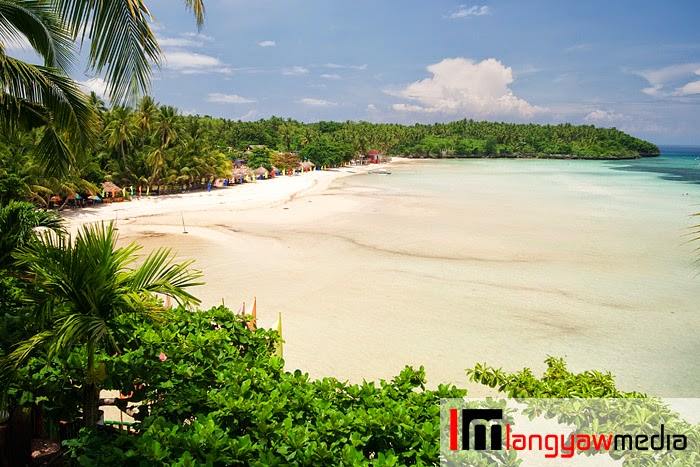
Lying 33 nautical miles northeast of Cebu City in central Philippines is a small piece of paradise — the archipelago of Camotes.
Four islands comprise the Camotes group: Pacijan (San Francisco town), Poro (Poro and Tudela towns), Ponson (Pilar town) and Tulang (an island barangay of San Francisco).
In prehistoric Philippines, the coastal settlements in these islands were at the crossroads of civilization: vibrant trading communities and important ports of call for artists and artisans. Southeast Asians and Chinese merchants have come to do business with local traders, mostly fishermen and farmers, as evidenced by a whole pre-Hispanic village excavated in Poro town in the 70s.
In 1521, a few days after Portuguese explorer Ferdinand Magellan discovered the Philippines for Spain, history dawned over Camotes islands. After the historic Mass in Mazaua (Limasawa) Leyte, the expedition’s official chronicler Pigafetta wrote on his journal that the flotilla of five ships dropped anchor on the coast of Polo (Poro), near Pozon (Ponson) and Ticobon (Pacijan) islands, to wait for Kolambu, the chieftain of Mazaua. The group then proceeded to Zubu (Cebu) where Magellan erected a wooden Cross to symbolize Spain’s Christianization in the Far East.
Today, sun-worshippers and nature pilgrims have discovered the charm of Camotes. They come to revere its supremely beautiful beaches and lake; and revel in its rich culture and history celebrated in songs and stories by a warm and friendly people.
(www.camotesislandph.com)
 Travelers Blog