Simala
is a name that refers to the church in the Monastery of the Holy Eucharist. It
is located in the small village of Sibonga in the southern part of Cebu island.
The monastery is the place where the Marian Monks live.
The place started as a small farm where two
monks lived. Through those years that they stayed in this wide piece of land,
they developed it by planting trees and vegetables and raising chickens and
farm animals. They also constructed a chapel and houses made of local
materials. Soon the place was called as Marian Hills. When an epidemic hit this
community, the monks incessantly prayed for the intercession of Mother Mary and
to save the children who suffered from that epidemic.
With the help of the local population, this
small community soon developed until the monks constructed a church that will
honor the Blessed Virgin Mary for all the miracles that helped the people of
Sibonga.
When, the church was built, the whole place was
transformed. It became known as Simala and Marian Hills, being the home of the
Marian Monks. For those who are not privy of the story of Simala, they are
prone
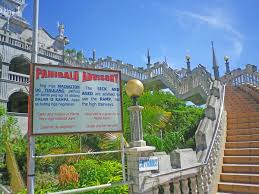
to connect the name “simala” to “himala” or “milagro” or miracles. But the Wikipedia says that Simala is a small community in the Province of Oristano in the Italian region of Sardinia. Since, there was no one to talk to about the real origin of the word Simala, I just leave it that way – if there is a place in Italy known as Simala, then, there is also one place in Cebu that is called Simala.
The Simala Shrine of the Blessed Virgin Mary of Cebu is a place where stories of miracles and healing occurred many years ago.
We started our tour from the City of Cebu that early morning of Friday, September 11, three days after the celebration of the birthday of the Blessed Mother. We traveled for about two hours until we reached the town of Sibonga. We turned right (depends on your orientation and origin), and followed the narrow road leading to the Shrine. The side of the road was adorned with multi-colored banners and flaglets. These were remnants of the celebration three days ago.
The Monastery of the Holy Eucharist and the Church of the Blessed Virgin Mary comprise the whole
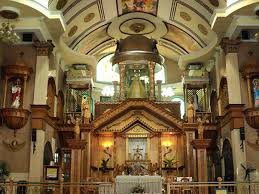
Simala.
The Shrine has a church, prayer or adoration corners, a library and exhibit
area, a convent, station of the cross, a park, an agricultural farm, a well
landscaped lawns, a souvenir shop, a giant statue of the Blessed Virgin Mary, a
man-made waterfalls, cottages and shed houses, among others.
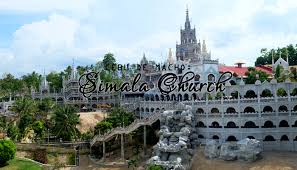
From the distance, the whole structures looked
like a castle.
From the entrance, I walked the concrete walkway
and turned to the right to follow the rest of the pilgrims who were going to
the main altar or the church. Once inside the church I silently sat on one of
the pews, whispered my prayers and asked God for the forgiveness of my sins and
blessings for my family. I felt fulfilled to have visited Simala. There, a
great feeling of hope that good things may happen to me filled my soul.
However, I felt a little sadness because the one that I loved most dearly was
not with me. It could have been the happiest day of my life when I prayed in
the Shrine in the company of the one that I love.
Anyway, it was such a moment to commune with
God, whoever you
How
does Simala affect the lives of the Marian devotees? Well, many stories of
miracles have been documented in the church. Spread in the exit area of the
Shrine, are rows and rows of cabinets with stories of miracles. People who
found difficulty walking were able to walk without the aid of crutches.
People who suffered from incurable illness like
cancer had been cured because of their devotion to Mama Mary or the Blessed
Virgin Mary. Students who failed in the professional examinations not only once
but many times, went on a pilgrimage to the Shrine and prayed for help. They
were able to pass these examinations. Isn’t these miracles? Stories of miracles
are documented with articles and pictures and placed inside the cabinet that
lined the hallway of the Shrine.
For those who believe in miracles,
“Simala”, “Himala” or “milagro”, these phenomenon
were true. At one instance, when the Blessed Virgin Mary’s image shed tears,
devotees flocked to the Shrine to pray. The devotees also told this story to
their friends and encouraged them to pray the rosary and ask for healing of the
people and the country.
Simala, the Shrine
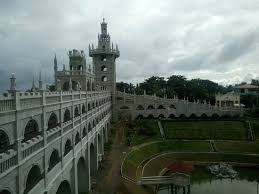
of the Blessed Virgin Mary, the Monastery of the Holy Eucharist, the home of the Marian Monks, is a miraculous place that symbolizes hope and peace for the believers of the Christian faith.
A tourist who visited several big churches in Europe, told me that Simala is the biggest shrine she had seen so far.
So, the next time you visit Cebu, this is how to get to Simala.
From any point in Cebu City, take the taxi or the Jeepney to the Southbound Bus Terminal. Ride the Ceres Bus that pass by the Municipality of Sibonga. Tell the driver that you will go down on the Intersection going to Simala. From there, ride the tricycle or “habal-habal”, a single motorcycle to Simala. Arrange with the driver for your fare in going to Simala. You can also ask the locals about the fare in going to Simala.
From Cebu City, you can also hire an air-conditioned Van. Most Van for hire, will charge you with a fixed amount, for example from P2,500 to P4,000 for 10 hours. Meaning, after you visited Simala, you can also visit other tourist spots in Cebu City like the Taoist Temple.
 Travelers Blog